

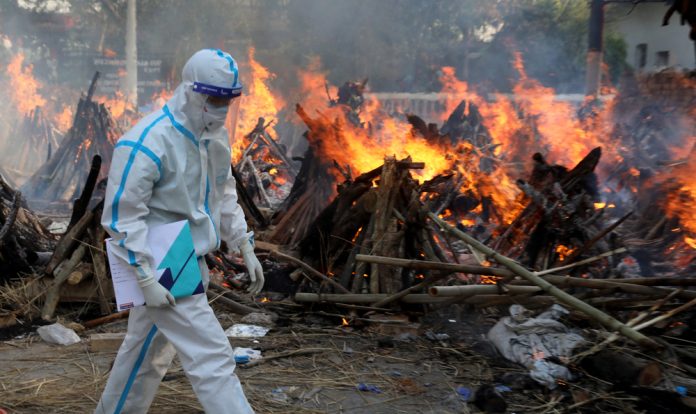
A new global system should be set up to respond faster to disease outbreaks to help ensure no future virus causes a pandemic as devastating as COVID-19, an independent World Health Organisation (WHO) review panel says.
The experts found crucial shortcomings in the global response in early 2020 – including a delay in declaring an emergency, a failure to impose travel restrictions and an entire “lost month” when countries neglected to respond to warnings – that let the virus quickly spread into a crippling pandemic.
To address those problems, the WHO should be given the power to send investigators swiftly to chase down new disease outbreaks, and to publish their full findings without delay.
“It is critical to have an empowered WHO,” said panel co-chair and former New Zealand prime minister Helen Clark for the launch of the report COVID-19: Make It the Last Pandemic.
Co-chair Ellen Johnson Sirleaf, a former president of Liberia, said: “We are calling for a new surveillance-and-alert system that is based on transparency and allows WHO to publish information immediately.”
Health ministers will debate the findings at the WHO’s annual assembly opening on May 24.
Diplomats say the European Union is driving reform efforts at the UN agency though this will take time.
“We look forward to working with our member states to discuss the recommendations of this panel and the other committees to build a stronger WHO,” WHO Director-General Tedros Adhanom Ghebreysus said.
The experts noted that Chinese doctors in the central city of Wuhan had reported cases of unusual pneumonia in December 2019, with the WHO picking up reports from the Taiwan Centres for Disease Control and others.
But when the WHO’s Emergency Committee met on January 22, it stopped short of declaring an international health emergency.
That declaration did not come until eight days later, costing crucial time.
The committee, acting under the WHO’s International Health Regulations, also declined to endorse international travel restrictions that would have slowed the spread of the virus.
The experts said those guidelines need to be changed.
Governments, meanwhile, failed to grasp that the emergency declaration was the WHO’s “loudest possible alarm,” the experts said.
“It is glaringly obvious to the panel that February 2020 was a lost month, when steps could and should have been taken to curtail the epidemic and forestall the pandemic.”
Instead of preparing their hospitals for COVID-19 patients, many countries engaged in a “winner-takes-all” scramble for protective equipment and medicines, it said.
The panel did not lay specific blame on China for its actions in the early days of the pandemic or on WHO head Tedros.
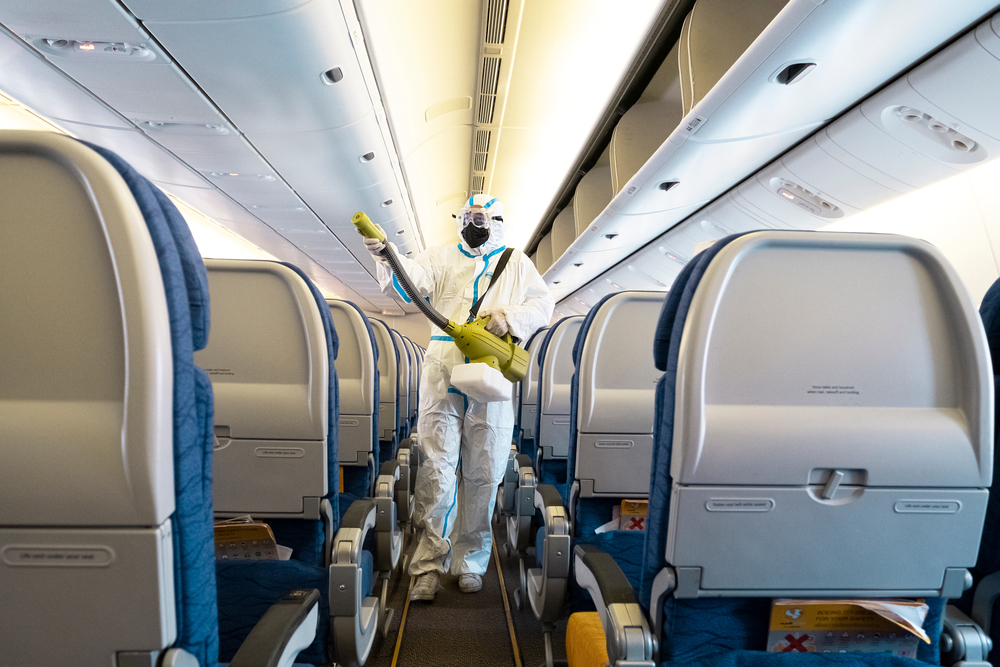
The panel urged the WHO and World Trade Organisation to convene governments and drug makers to hammer out an agreement on voluntary licensing and technology transfers to boost vaccine production.
If a deal can’t be reached in three months, then a so-called TRIPS waiver on patents should apply, it said.
Ms Clark called for “banging heads together” to get a commitment to secure licences along with tech and knowledge transfers.
“Let’s be clear about this. We’re dealing with pharmaceutical companies in the north that have the technology,” Johnson Sirleaf said.



