

The Sunshine Coast can expect to experience the peak of the Omicron wave “some time next week” along with most of south-east Queensland, says the chief health officer.
Dr John Gerrard said the Gold Coast appeared to be already close to or past its peak as that region’s hospitals struggled with a huge caseload.
Dr Gerrard said the “average peak” in Queensland would happen next week but at different times for different regions.
However, that was only the top of the wave and did not mean the pandemic was over.
In fact, he said the peak would be followed by an “extension” of a longer, flatter period of high community transmission when students returned to school.
“The average peak will be some time next week but it won’t be even across the state, so different regions will have different peaks at different times,” he said.
He said Cairns appeared to be on the same trajectory as south-east Queensland.
Dr Gerrard said the peak would not be as steep as originally anticipated, likely because of Queensland’s high vaccination rate.
He said the number of hospital patients was also far lower than the thousands projected and that was likely due to people following health advice and taking precautions.
“This, we believe, has to do with people’s changing behaviour in avoiding getting infected,” Dr Gerrard told reporters on Monday.
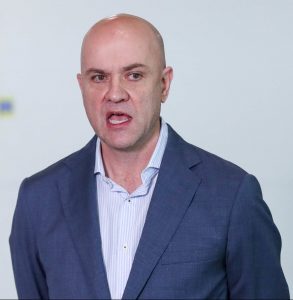
“So I certainly thank the people of Queensland in heeding the warnings. So it it does appear at this stage that the number of hospitalisations is lower than we expected.”
Pressure on metropolitan Brisbane hospitals would surge this week but he said they were so far coping “fine”.
Queensland reported 10,212 new COVID cases on Monday and 13 deaths, all over the age of 70.
Dr Gerrard says there are 879 people being treated in hospital for COVID-19 and another 50 patients in intensive care, with 12 of those on a ventilator.
Keep independent and fair Sunshine Coast stories coming by subscribing to our free daily news feed. All it requires is your name and email. See SUBSCRIBE at the top of this article
Meanwhile, Federal Health Minister Greg Hunt said the peak of infections had passed in NSW, Victoria, the ACT and South Australia.
Mr Hunt said COVID-19 figures in several states and territories were showing promising signs.
“We’ve seen a decrease in case numbers significantly and we’ve seen a decrease in hospitalisation numbers of over 100 in Victoria and NSW,” Mr Hunt told reporters in Melbourne.
“That will flow through to ICU numbers and ventilation, so it’s an important moment where we are seeing now clear signs this Omicron wave … has peaked.”
Monday marked the beginning of the rollout of free rapid antigen tests to concession card-holders across the country.
More than six million Australians who have a concession will be eligible for 10 free rapid tests at pharmacies throughout a three-month period, with a limit of five in one month.
However, Pharmacy Guild of Australia president Trent Twomey said supply shortages of the tests meant the rollout would be significantly impacted.
“We don’t have enough today,” he told the Nine Network on Monday.
“There are 6000 community pharmacies in Australia and 804 pharmacies went live this morning. The majority will simply not be going live.”
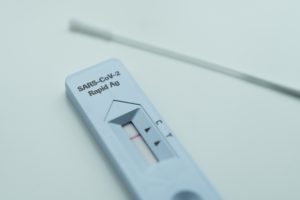
Mr Twomey says there are 13 million tests arriving in the next week and 22 million in the first three weeks of February just for pharmacies.
The Health Minister said pharmacists who were participating in the rollout had been reserving large supplies of the tests.
“All the participating pharmacists are putting aside tests. I think that’s really important,” Mr Hunt said.
“They’re reserving spaces. That’s not to say that every pharmacy on day one is participating. It’s a phased program and, importantly, it’s a supplementary program.”
Mr Hunt said the hoarding of rapid tests had also contributed to the widespread supply issues across the country, but indicated there would be enough stock for pharmacists going forward.
However, he warned retailers who were price gouging tests would be targeted by the consumer watchdog.
“There were clear cases where there had been some hoarding. Unfortunately it does include people that were scooping up to resell at inflated prices,” he said.
– with AAP